
Advertisement
Bone marrow cells recruited through the neuropilin-1 receptor promote arterial formation at the sites of adult neoangiogenesis in mice
Serena Zacchigna,1 Lucia Pattarini,1 Lorena Zentilin,1 Silvia Moimas,1 Alessandro Carrer,1 Milena Sinigaglia,1 Nikola Arsic,1 Sabrina Tafuro,1 Gianfranco Sinagra,2 and Mauro Giacca1
1Molecular Medicine Laboratory, International Centre for Genetic Engineering and Biotechnology (ICGEB), Trieste, Italy. 2Cardiovascular Department, “Ospedali Riuniti” and University of Trieste, Trieste, Italy.
Address correspondence to: Mauro Giacca, ICGEB Trieste, Padriciano 99, 34012 Trieste, Italy. Phone: 39-040-375-7324; Fax: 39-040-375-7380; E-mail: giacca@icgeb.org.
Find articles by Zacchigna, S. in: PubMed | Google Scholar
1Molecular Medicine Laboratory, International Centre for Genetic Engineering and Biotechnology (ICGEB), Trieste, Italy. 2Cardiovascular Department, “Ospedali Riuniti” and University of Trieste, Trieste, Italy.
Address correspondence to: Mauro Giacca, ICGEB Trieste, Padriciano 99, 34012 Trieste, Italy. Phone: 39-040-375-7324; Fax: 39-040-375-7380; E-mail: giacca@icgeb.org.
Find articles by Pattarini, L. in: PubMed | Google Scholar
1Molecular Medicine Laboratory, International Centre for Genetic Engineering and Biotechnology (ICGEB), Trieste, Italy. 2Cardiovascular Department, “Ospedali Riuniti” and University of Trieste, Trieste, Italy.
Address correspondence to: Mauro Giacca, ICGEB Trieste, Padriciano 99, 34012 Trieste, Italy. Phone: 39-040-375-7324; Fax: 39-040-375-7380; E-mail: giacca@icgeb.org.
Find articles by Zentilin, L. in: PubMed | Google Scholar
1Molecular Medicine Laboratory, International Centre for Genetic Engineering and Biotechnology (ICGEB), Trieste, Italy. 2Cardiovascular Department, “Ospedali Riuniti” and University of Trieste, Trieste, Italy.
Address correspondence to: Mauro Giacca, ICGEB Trieste, Padriciano 99, 34012 Trieste, Italy. Phone: 39-040-375-7324; Fax: 39-040-375-7380; E-mail: giacca@icgeb.org.
Find articles by Moimas, S. in: PubMed | Google Scholar
1Molecular Medicine Laboratory, International Centre for Genetic Engineering and Biotechnology (ICGEB), Trieste, Italy. 2Cardiovascular Department, “Ospedali Riuniti” and University of Trieste, Trieste, Italy.
Address correspondence to: Mauro Giacca, ICGEB Trieste, Padriciano 99, 34012 Trieste, Italy. Phone: 39-040-375-7324; Fax: 39-040-375-7380; E-mail: giacca@icgeb.org.
Find articles by Carrer, A. in: PubMed | Google Scholar
1Molecular Medicine Laboratory, International Centre for Genetic Engineering and Biotechnology (ICGEB), Trieste, Italy. 2Cardiovascular Department, “Ospedali Riuniti” and University of Trieste, Trieste, Italy.
Address correspondence to: Mauro Giacca, ICGEB Trieste, Padriciano 99, 34012 Trieste, Italy. Phone: 39-040-375-7324; Fax: 39-040-375-7380; E-mail: giacca@icgeb.org.
Find articles by Sinigaglia, M. in: PubMed | Google Scholar
1Molecular Medicine Laboratory, International Centre for Genetic Engineering and Biotechnology (ICGEB), Trieste, Italy. 2Cardiovascular Department, “Ospedali Riuniti” and University of Trieste, Trieste, Italy.
Address correspondence to: Mauro Giacca, ICGEB Trieste, Padriciano 99, 34012 Trieste, Italy. Phone: 39-040-375-7324; Fax: 39-040-375-7380; E-mail: giacca@icgeb.org.
Find articles by Arsic, N. in: PubMed | Google Scholar
1Molecular Medicine Laboratory, International Centre for Genetic Engineering and Biotechnology (ICGEB), Trieste, Italy. 2Cardiovascular Department, “Ospedali Riuniti” and University of Trieste, Trieste, Italy.
Address correspondence to: Mauro Giacca, ICGEB Trieste, Padriciano 99, 34012 Trieste, Italy. Phone: 39-040-375-7324; Fax: 39-040-375-7380; E-mail: giacca@icgeb.org.
Find articles by Tafuro, S. in: PubMed | Google Scholar
1Molecular Medicine Laboratory, International Centre for Genetic Engineering and Biotechnology (ICGEB), Trieste, Italy. 2Cardiovascular Department, “Ospedali Riuniti” and University of Trieste, Trieste, Italy.
Address correspondence to: Mauro Giacca, ICGEB Trieste, Padriciano 99, 34012 Trieste, Italy. Phone: 39-040-375-7324; Fax: 39-040-375-7380; E-mail: giacca@icgeb.org.
Find articles by Sinagra, G. in: PubMed | Google Scholar
1Molecular Medicine Laboratory, International Centre for Genetic Engineering and Biotechnology (ICGEB), Trieste, Italy. 2Cardiovascular Department, “Ospedali Riuniti” and University of Trieste, Trieste, Italy.
Address correspondence to: Mauro Giacca, ICGEB Trieste, Padriciano 99, 34012 Trieste, Italy. Phone: 39-040-375-7324; Fax: 39-040-375-7380; E-mail: giacca@icgeb.org.
Find articles by Giacca, M. in: PubMed | Google Scholar
Published May 15, 2008 - More info
J Clin Invest. 2008;118(6):2062–2075. https://doi.org/10.1172/JCI32832.
© 2008 The American Society for Clinical Investigation
Received: May 29, 2007; Accepted: April 9, 2008

-
Results
Different angiogenic phenotypes induced by the prolonged expression of VEGF isoforms and of Sema3A. In keeping with our previous observations (23, 25–27), the prolonged expression of VEGF165 in normoperfused rodent skeletal muscle was found to induce a massive angiogenic response, which was mainly characterized by the formation of a large number of arterioles. These vessels had a 20–120–μm diameter and were provided with a thick layer of α-SMA– and NG2-positive cells (Figure 1A and references above). Of interest, the sites of VEGF-induced angiogenesis were always interspersed with a wide infiltration of mononuclear cells. We have previously shown that these infiltrating cells are of BM origin; in no case, however, were these cells found to directly differentiate into the α-SMA–positive cells covering the newly formed arterioles (see ref. 25 and Supplemental Figure 1; supplemental material available online with this article; doi:10.1172/JCI32832DS1). To our surprise, when a similar experiment was performed by the injection of an AAV vector expressing VEGF121, no cellular infiltration was observed. Even more intriguingly, the absence of mononuclear cell infiltration was paralleled by a remarkably poor formation of arterioles (Figure 1A).
 Figure 1
Differential effects of VEGF165, VEGF121, and Sema3A on angiogenesis. (A) α-SMA immunohistochemistry of muscle sections at 1 month after the injection of AAV-VEGF121 or AAV-VEGF165. While VEGF165 induced the appearance of a striking number of arterioles interspersed within a massive infiltration of mononuclear cells, VEGF121 was incapable of sustaining either effect. The lower panels show higher-magnification image to highlight the presence of cellular infiltration (hematoxylin staining on the left) and of arterial vessels (α-SMA staining on the right; arterioles indicated by black arrowheads), specifically in muscles expressing VEGF165. Scale bars: 100 μm. (B) Comparison between VEGF121- and VEGF165-induced angiogenesis. While both VEGF isoforms induce endothelial cell proliferation to a similar extent (CD31 staining in green), only VEGF165 expression results in a significant increase in the total number of cells (DAPI nuclear staining in blue) paralleled by the formation of new arteries (α-SMA staining in red). Histograms on the bottom show the quantification of the relative area occupied by cellular nuclei (DAPI), endothelial cells (CD31), or SMCs (α-SMA) in 20 independent sections for each treatment. Data are presented as means ± SD. *Statistical significance over control, AAV–LacZ-treated muscles (P < 0.05). Scale bars: 100 μm. (C) Schematic representation of the interactions between the 3 ligands (VEGF165, VEGF121, and Sema3A) and the 3 receptors (VEGFR-1/Flt-1, VEGFR-2/Flk-1, and NP-1) considered in this study. (D) Cellular infiltration induced by Sema3A in the absence of neoangiogenesis. The long-term overexpression of Sema3A induced the appearance of a mononuclear cell infiltration, very similar to the one observed in AAV-VEGF165–treated muscles (hematoxylin staining in the upper panel). However, no new arteries could be detected in these muscles, as shown here by α-SMA immunohistochemistry (lower panel). Scale bar: 100 μm.
To quantify the effects of both VEGF isoforms in terms of capillary and artery formation, we performed CD31/α-SMA double immunofluorescence on muscle sections from mice injected with either AAV-VEGF165 or AAV-VEGF121 and quantified the relative areas occupied by cellular nuclei (DAPI staining), endothelial cells (CD31), and SMCs (α-SMA) at 1 month after transduction. Both VEGF isoforms stimulated the proliferation of endothelial cells to a similar extent; however, a specific increase in the total number of cells as well as in the number of α-SMA–positive vessels was only evident in muscles expressing VEGF165 (Figure 1B).
Both VEGF121 and VEGF165 bind the canonical VEGF receptors (Flt-1 and Flk-1), whereas only VEGF165 also interacts with the coreceptor NP-1, a specific receptor for Sema3A (Figure 1C) (28). We indeed found that the AAV-mediated delivery of Sema3A in the skeletal muscle promoted a massive cellular infiltration very similar to VEGF165 (Figure 1D). In contrast with VEGF165, however, no new blood vessels were detected in the muscles overexpressing Sema3A.
To further characterize the vascular network present in the muscles expressing VEGF121, VEGF165, or Sema3A, animals were perfused in vivo with a bolus of 0.2-μm diameter fluorescent microspheres in order to quantify the blood pool contained in the treated muscles by filling up the microcirculation. The results of this analysis indicated that both VEGF isoforms determined an almost 7-fold increase in vascular volume, while Sema3A had no effect (Supplemental Figure 2B) despite both transgenes being expressed at similar levels (Supplemental Figure 2A). Confocal microscopy 3D reconstructions of the microsphere distribution inside the microcirculation of animals treated with the different vectors and lectin staining of the perfused vessels are shown in Supplemental Figure 2, C and D–E, respectively.
In vivo inhibitory effect of Sema3A on VEGF165-induced angiogenesis. We discovered that AAV-Sema3A when coinjected with AAV-VEGF165 markedly suppressed VEGF165-induced angiogenesis. At 1 month after injection of a 1:1 combination of the 2 vectors, a remarkable inhibition of VEGF165-induced endothelial sprouting was evident (Figure 2A). This result is consistent with in vitro data showing that Sema3A counteracts endothelial cell activation by competing with VEGF165 (6). Most notably, in a time-course experiment following injection of AAV-VEGF165, AAV-Sema3A, or both, the formation of new α-SMA–positive arterioles induced by VEGF165 at 1 and 3 months after injection was completely suppressed by Sema3A (Figure 2B). The extent of cellular infiltration was similar at the earlier time points (up to 14 days) for all 3 treatments; at 1 and 3 months after injection, however, the number of infiltrating cells remained substantially unchanged or increased in the samples expressing Sema3A (either alone or in combination with VEGF165), while it was remarkably reduced with VEGF165 alone. A dose-response analysis of the antiangiogenic effect of AAV-Sema3A is shown in Supplemental Figure 3.
 Figure 2
Inhibition of VEGF165-induced angiogenesis by Sema3A. (A) Staining with an α-CD31 antibody revealed massive angiogenic sprouting induced by VEGF165 (upper panel), the absence of new capillary formation in Sema3A-expressing muscles (middle panel), and a potent effect of Sema3A in counteracting VEGF165-induced angiogenesis (lower panel). Scale bars: 100 μm. (B) Immunohistochemistry using an anti–α-SMA antibody shows the progressive formation of arteries over time in muscles overexpressing VEGF165 (upper panels), whereas new arteries were generated in response to Sema3A (middle panels). The combined expression of VEGF165 with Sema3A resulted in an almost complete inhibition of the VEGF165-induced angiogenic effect (lower panels). Scale bars: 100 μm. (C) The capacity of Sema3A to counteract the increase in vascular volume driven by VEGF165 was assessed by fluorescent microspheres at both 1 and 3 months after vector delivery. Data are presented as a ratio between the emission value of the treated and the contralateral mock-treated muscle. Shown are means ± SD. *P < 0.05. (D) The area occupied by endothelial cells, as measured by anti-CD31 fluorescent labeling, was quantified in muscles injected with AAV- VEGF165 and AAV- VEGF121, either alone or in combination with AAV-Sema3A. Shown are means ± SD. (E) The presence of apoptotic endothelial cells (white arrowheads) is shown by double labeling for the endothelial marker CD31 and for the apoptotic marker cleaved caspase-3 in muscles injected with AAV- VEGF165 and AAV-Sema3A. Right panels show the blue/green (upper) and blue/red (lower) channels of the image. Insets show higher magnification. Scale bar: 100 μm.
The histological evidence that Sema3A exerts a potent inhibitory effect on neoangiogenesis was also reflected by the quenching of the VEGF165-induced increase in vascular volume at 1 month after injection and by its complete abrogation at 3 months, as concluded after the injection of fluorescent microspheres (Figure 2C).
To further understand whether the antiangiogenic effect of Sema3A was exclusively due to competition with VEGF165 for binding to NP-1 or might involve a direct negative effect of Sema3A on endothelial cells, we coinjected AAV-Sema3A with either AAV-VEGF165 or AAV-VEGF121 (since VEGF121 does not bind NP-1, it should not compete with Sema3A). We observed that Sema3A was equally able to reduce the number of CD31+ endothelial cells formed in response to both VEGF isoforms, suggesting a direct activity of Sema3A on the microvasculature (Figure 2D). Consistent with these findings, we also observed that several CD31+ cells showed markers of apoptosis in muscles coexpressing VEGF165 and Sema3A. The percentage of CD31+ endothelial cells labeled by an anti-cleaved caspase-3 antibody was 6.8 ± 2.1 in muscles coinjected with AAV-VEGF165 and AAV-Sema3A, whereas it was less than 1% in muscles injected with either vector alone; a representative picture of an AAV-VEGF165 plus AAV-Sema3A–injected muscle after CD31/caspase-3 double labeling is shown in Figure 2E.
Characterization of the cells recruited to the muscles overexpressing VEGF165 or Sema3A. Considering the unexpected property of both VEGF165 and Sema3A to induce a massive cellular infiltration although apparently exerting opposite effects on vessel growth, we investigated to determine whether the cells recruited by Sema3A also derive from the BM, similar to what we have previously observed after VEGF165 gene transfer (25). Unfractionated BM cells from male BALB/c donor mice were transplanted into lethally irradiated syngeneic female recipients, thus creating Y-BALB/c chimeric mice. After successful engraftment (>90% of blood mononuclear cells of donor origin at 1 month after transplantation), these mice were injected with equal doses of either AAV-VEGF165 or AAV-Sema3A (n = 3 per treatment). In situ hybridization to detect the Y chromosome using an FITC-labeled mouse DNA probe was performed at 1 month after vector injection. In our experimental settings, this procedure routinely detects approximately 80% of Y chromosome–positive cells when performed on tissues of male mice. In all transplanted, chimeric females injected with either vector, the majority of the infiltrating cells bore the Y chromosome (72% ± 7% and 78% ± 8% of Y chromosome–positive infiltrating cells in VEGF165- and Sema3A-expressing muscles, respectively; Figure 3A). Moreover, as previously shown for VEGF165 (25), these cells scored positive for the panleukocytic marker CD45 as well as for the myeloid marker CD11b (Figure 3B).
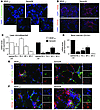 Figure 3
Recruitment of NP-1+ myeloid cells by VEGF165 and Sema3A. (A) The intramuscular injection of AAV-VEGF165 or AAV-Sema3A in female mice transplanted with male BM determined a massive infiltration of Y chromosome–positive cells (shown by FISH as a green dot inside a DAPI-stained blue nucleus). Scale bar: 100 μm. (B) The vast majority (>80%) of the cells recruited by both VEGF165 and Sema3A scored positive for the panleukocytic marker CD45 (left) as well as for the monocyte marker CD11b (right). Scale bar: 100 μm. (C) The cellular infiltrates from the muscles expressing either VEGF165 or Sema3A were laser microdissected to determine the expression levels of Flk-1, Flt-1, NP-1, and NP-2 by real-time PCR (normalized to those of the housekeeping gene GAPDH). With the exception of NP-2, these receptors were abundantly expressed in VEGF165-expressing muscles (white bars). In contrast, in muscles injected with AAV-Sema3A, NP-1 was the most abundantly expressed receptor (black bars). Shown are means ± SD of 3 independent quantifications. (D) The same quantifications described in C were performed on primary CD11b+ cells purified from the BM. Shown are means ± SD of 3 independent quantifications. (E) The majority of the cells recruited by both VEGF165 and Sema3A were colabeled by antibodies against CD11b (green) and NP-1 (red). NP-1 expression was also detected in the microvasculature (25). Scale bar: 100 μm. (F) Infiltrating CD11b+ cells from VEGF165- and Sema3A-transduced muscles were stained with antibodies against CD11b+ (red) and NP-2 (green). The majority of cells scored negative for NP-2, which was expressed by some vessels.
To begin to gain an understanding of which receptors might be involved in the recruitment of these cells, the cellular infiltrates formed in response to either AAV-VEGF165 or AAV-Sema3A were harvested by laser microdissection of muscle sections from the injected animals and the expression levels of the Flk-1, Flt-1, NP-1, and NP-2 receptors were measured by real-time PCR. The mononuclear cells found in the tissues expressing either VEGF165 or Sema3A expressed abundant levels of NP-1 (Figure 3C). In contrast, Flk-1, Flt-1, and NP-2 were primarily detected in the muscles treated with AAV-VEGF165, likely reflecting the presence of several activated endothelial cells in the microdissected samples. The expression levels of the 4 receptors were also quantified in primary CD11b+ cells purified from the BM by the use of magnetic beads. The NP-1 receptor was also found abundantly expressed in these cells (Figure 3D). Finally, we further confirmed by double immunostaining that the vast majority of the CD11b+ cells recruited to the muscles expressing either VEGF165 or Sema3A were also positive for NP-1 (Figure 3E) but not for NP-2 (Figure 3F). Both NP-1 and NP-2 antibodies stained part of the microvasculature. Collectively, these results point toward an essential role of NP-1 in mediating the recruitment of BM cells induced by both VEGF165 and Sema3A.
NP-1 is required for the recruitment of CD11b+ cells by VEGF165 and Sema3A. To further confirm that VEGF165 and Sema3A share the property of being able to recruit myeloid cells, primary CD11b+ cells were purified from the BM and tested for their ability to bind and migrate in response to recombinant human VEGF121 (rhVEGF121), VEGF165, or Sema3A. The results of the migration assay indicated that both VEGF165 and Sema3A act as chemoattractants for CD11b+ cells in a dose-dependent manner (Figure 4A). In contrast, a negligible number of cells migrated in response to VEGF121. In a consistent manner, both VEGF165 and Sema3A but not VEGF121 expressed as recombinant proteins fused to alkaline phosphatase (AP) bound to cell-surface receptors on CD11b+ cells, consistent with a prominent involvement of the NP-1 receptor in this binding (Figure 4B).
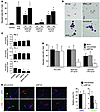 Figure 4
Fundamental role of NP-1 in CD11b+ cell recruitment by VEGF165 and Sema3A. (A) The number of BM CD11b+ cells migrated in response to different concentrations of VEGF165, VEGF121, and Sema3A was counted in 8 fields per membrane. Histograms show the mean number of migrated cells ± SD. *P < 0.05 over control (no chemoattractant). (B) Cell supernatants containing fusion proteins between AP and VEGF165, VEGF121, or Sema3A were added to CD11b+ cells. Binding was detected upon addition of VEGF165-AP and Sema3A-AP, but not VEGF121-AP. AP-tag only was used as a negative control. Original magnification, ×20. (C) Expression of Flk-1, Flt-1, and NP-1 was analyzed in CD11b+ cells transfected with lipids alone or with siNP1bis and siNP1ter (see Supplemental Figure 4) and normalized to the housekeeping gene GAPDH. Shown are means ± SD of 3 independent experiments. *P < 0.05 over untreated cells. (D) Purified CD11b+ cells were treated with siNP1ter or with a control scrambled siRNA and tested for their ability to migrate in response to VEGF165 (50 ng/ml) and Sema3A (700 ng/ml). Silencing of NP-1 (white bars) markedly impaired cell migration to both chemoattractants. Shown are means ± SD of 3 independent experiments. *P < 0.05 over untreated cells. (E) CD11b+ cells were lipofected with either siNP1ter or the control scrambled siRNA, labeled with the fluorescent dye PKH67, and reinjected i.v. into AAV-VEGF165-treated syngeneic mice. Several PKH67-labeled cells (green) were recruited to VEGF165-expressing muscles, close to α-SMA–labeled arterioles (red). Conversely, very few siNP1ter-treated cells were found at the site of VEGF165-induced angiogenesis, as quantified in the graphs on the right. Shown are means ± SD. n = 6. *P < 0.05. Scale bar: 50 μm.
To directly address the role of NP-1 expressed by BM CD11b+ in mediating the recruitment of these cells by VEGF165 and Sema3A, we designed 3 siRNAs targeting the NP-1 mRNA (Supplemental Figure 4A). The 2 most active siRNAs (siNP1bis and siNP1ter, which target NP-1 mRNA at positions 2577 and 2860, respectively) were lipofected either alone or in combination into primary CD11b+ cells followed by real-time PCR quantification of Flk-1, Flt-1, and NP-1 transcripts. siNP1ter reduced the levels of overexpressed and endogenous NP-1 by more than 90% and 70%, respectively, in the absence of off-target effects (Figure 4C and Supplemental Figure 4, B–F). siNP1ter-treated CD11b+ cells were then tested for their migratory activity in response to VEGF165 or Sema3A. Silencing of NP-1 specifically impaired the migration of CD11b+ cells in response to both chemoattractants, used at their most effective dose. In contrast, the same siRNA had only a modest effect when the same cells were challenged with 20% serum (Figure 4D). This result shows that the chemoattractant activity of VEGF165 and Sema3A toward CD11b+ cells is exerted through NP-1. To further confirm the relevance of NP-1 in CD11b+ cell recruitment in vivo, we treated cells with either siNP1ter or a scrambled control siRNA and labeled them with the fluorescent dye PKH67 prior to injection into AAV-VEGF165-injected syngeneic animals. As shown in Figure 4E, several control-treated labeled cells were recruited to the site of VEGF165 overexpression, whereas very few siNP1ter-treated cells accumulated at these sites.
As NP-1 usually signals through the heterodimerization with other receptors, we sought to determine the involvement of possible NP-1 partners in CD11b+ cell migration. Consistent with the real-time RT-PCR and immunofluorescence results shown in Figure 3, we detected by Western blotting abundant levels of NP-1 and Flt-1 but no expression of NP-2 in primary CD11b+ cells purified from the BM (Supplemental Figure 5A). Flk-1 expression could be detected by real-time RT-PCR (Figure 3) but not by Western blotting, likely indicating low levels of expression of this receptor. However, both Flk-1 and Flt-1 coimmunoprecipitated with NP-1, with the signal being even stronger for Flk-1 than for Flt-1. Thus, Flk-1, even if expressed at low levels, is tightly associated to NP-1 in CD11b+ cells (Supplemental Figure 5B). To further validate the presence and activity of the different receptors in CD11b+ cells, we assessed whether their silencing affected cell migration in response to VEGF165. As shown in Supplemental Figure 5C, both anti–Flt-1 and anti–Flk-1 siRNAs effectively inhibited cell migration. Interestingly, silencing of plexin-A1, which is also expressed at low levels by CD11b+ cells (not shown), did not have any effect on CD11b+ cell migration.
BM CD11b+ cells stimulate SMC proliferation and migration. The intriguing observation that VEGF121 is neither able to bind and recruit BM CD11b+ cells nor to cause the formation of arteries vivo suggests that these cells play an important role during the later phases of the angiogenic process, possibly promoting SMC recruitment and the subsequent formation of arterial vessels. As a first step to verify this hypothesis, we fractionated total BM according to CD11b expression, and both the positive and the negative fractions were tested for their ability to attract primary arterial SMCs. As shown in Figure 5A, the CD11b+ fraction exhibited a marked, dose-dependent chemotactic activity toward SMCs.
 Figure 5
Soluble factors produced by CD11b+ cells stimulate SMC migration and proliferation. (A) CD11b+ and CD11b– cells were used as chemoattractants for primary coronary artery SMCs. Histograms show the mean number of migrated cells ± SD, as counted in more than 8 fields per membrane. Regression analysis indicated that the only supernatant conditioned by CD11b+ cells was able to recruit SMC cells in a dose-related manner (r = 0.71; P < 0.05). (B) SMCs and HUVECS were exposed to medium conditioned by CD11b+ cells, and cell proliferation was measured by MTT assay. SMCs but not HUVECs responded to mitogens secreted by CD11b+ cells. Shown are means ± SD of 3 experiments. *P < 0.05 over unstimulated cells; F = 245.0 and 0.32 for SMCs and HUVECs, respectively. (C) SMCs and HUVECs were exposed to a medium conditioned by CD11b+ cells previously primed by 50 ng/ml of hrVEGF121 or hrVEGF165. Upon exposure to both VEGF isoforms, CD11b+ cells became able to stimulate the proliferation of both SMCs (as in B) and HUVECs. Shown are means ± SD of 3 experiments. *P < 0.05 over unstimulated cells; F = 90.61 and 143.6 for SMCs and HUVECs, respectively. (D) The expression levels of a panel of candidate genes were determined by real-time PCR in muscles injected with AAV-VEGF121 or AAV-VEGF165. Data are presented as a ratio between the VEGF-expressing and the mock-injected contralateral muscles. Shown are means ± SD. n ≥ 6. (E) The same transcripts considered in part D were also analyzed in primary CD11b+ BM cells. Shown are means ± SD of 3 independent quantifications.
Next, we investigated the ability of CD11b+ cells to influence SMC proliferation. We found that the CD11b+ cell–conditioned medium significantly stimulated the proliferation of SMCs; in contrast, no effect could be observed when the same conditioned medium was applied to HUVECs (Figure 5B). This result indicates that unstimulated CD11b+ cells secrete factors able to drive mitogenic signals in SMCs but not in endothelial cells. Of interest, when CD11b+ cells were previously exposed to high doses of VEGF121 or VEGF165, they acquired the ability to sustain the proliferation of both SMCs and HUVECs to a similar extent (Figure 5C).
Overall, these experiments indicate that BM CD11b+ cells secrete soluble factors able to trigger both the proliferation and the migration of SMCs, thus supporting a possible paracrine action of these cells in the recruitment of SMCs during neovascularization in vivo. To address this issue, we analyzed the expression levels of a panel of molecules previously shown to play a role in vessel maturation. As shown in Figure 5D, muscles injected with AAV-VEGF165 exhibited a specific upregulation of TGF-β, PDGF-B, and the CXCR4 chemokine receptor as compared with muscles injected with AAV-VEGF121. Interestingly, most of these transcripts were abundantly expressed by primary BM CD11b+ cells (Figure 5E). In contrast, no significant variations could be detected in the expression levels of Ang I, ephrin-B2, and stromal-derived factor-1 (SDF-1) (a CXCR4 ligand). The striking differences detected in the former group of genes cannot be attributed to different levels of expression of VEGF165 versus VEGF121, as shown by the specific quantification of the human mRNAs expressed from the transduced vectors (Supplemental Figure 2A).
A model to explain the key role of CD11b+ cells in the formation of arterial vessels. Taken together, the results so far described are consistent with a model implying a relevant role of BM CD11b+ cells in promoting the formation of arterial vessels during adult neovascularization (Figure 6). According to this model, both VEGF165 and Sema3A share the ability to bind NP-1 and to attract CD11b+ BM cells, which express this receptor. VEGF165 and Sema3A, however, have opposite effects on the local endothelium, as the former activates endothelial cell proliferation and migration, while the latter inhibits both processes. In cooperation with the local endothelium activated by VEGF165, the recruited myeloid cells in turn promote the maturation of the growing vessels through a paracrine mechanism that determines the enrollment of SMC/pericytes. Thus, arterial formation strictly relies on the simultaneous occurrence of 2 effector mechanisms, namely endothelial cell activation on one side and CD11b+ cell–dependent SMC engagement on the other side.
 Figure 6
A model to explain the role of BM cells in arteriogenesis. Artery formation relies on the occurrence of 2 concomitant events, namely the activation of the local endothelium (through the canonical VEGF receptors) and the recruitment of BM-derived mononuclear cells through the NP-1 receptor; these cells in turn engage SMCs to the sites of endothelial activation. Only VEGF165 is able to stimulate both events and is thus arteriogenic. In contrast, VEGF121 activates the endothelium locally, thus inducing capillary sprouting, but is not able to bind NP-1, and thus it does not recruit BM cells nor does it form arteries. Finally, Sema3A, a high-affinity ligand for NP-1, is a potent recruiter of mononuclear cells from the BM, but it exerts an inhibitory effect on endothelial cells and therefore is not angiogenic.
CD11b+ cells promote vessel maturation and artery formation in vivo. Our model would predict that the combination of VEGF121, which activates endothelial cells promoting capillary sprouting, with CD11b+ mononuclear cells, which act in a paracrine fashion by attracting SMCs, should result in the formation of arterial vessels. To validate this prediction in vivo, we injected mice with AAV-VEGF121 either alone or in combination with BM CD11b+ cells purified from syngeneic animals. As expected, VEGF121 determined massive capillary sprouting, which was evident at both 15 days and 1 month after injection (a representative image is shown in Figure 7A); however, no new arteries were formed. In contrast, in muscles that received the same dose of vector together with 5 × 10⁵ purified CD11b+ cells, a remarkable number of SMC-coated arterial vessels appeared in close proximity to the cellular infiltrates at both 15 days and 1 month after injection (this effect is quantified in Figure 7B, and 3 representative pictures showing artery formation are shown in Figure 7A). No effect at all on either endothelium or arteries was observed by the injection of the cells alone. To confirm the identity of the injected cells and to track their fate in vivo, in a subset of animals, the CD11b+ cells were ex vivo labeled with the lipophilic dye PKH26 immediately prior to injection. When coinjected with AAV-VEGF121, these cells were found to persist in the treated muscles for at least 3 weeks after transplantation (Figure 7C). Of interest, the simultaneous staining of arterial vessels using an anti–α-SMA antibody revealed that several of these cells were positioned in close proximity to the arterial vessel wall.
 Figure 7
CD11b+ cells promote the formation of arterial vessels through a paracrine effect in concert with the activated endothelium. (A) In vivo arterial formation by the coinjection of AAV-VEGF121 and CD11b+ cells. While AAV-VEGF121 only promotes massive capillary sprouting, as shown by CD31 staining in green (upper left panel), the simultaneous administration of purified CD11b+ cells determines the formation of several arteries (α-SMA staining in red) in close proximity to the cellular infiltrates (white arrows). Scale bar: 100 μm. (B) Quantification of the relative areas occupied by cellular nuclei (DAPI), endothelial cells (CD31), or SMCs (α-SMA) in 20 independent sections for each treatment (AAV-VEGF121, BM CD11b+ cells, or a combination of both). Data are presented as means ± SD. *Statistical significance over control, AAV-LacZ–treated muscles (P < 0.05). Cells, BM CD11b+ cells; C, control. (C) CD11b+ cell engraftment in the skeletal muscle. A large number of PKH26-labeled CD11b+ cells injected together with AAV-VEGF121, could be detected in the skeletal muscle as red fluorescent cells at day 3 after injection (left panel). A lower number of cells were still present at longer time points (shown at 21 days on the right panel) in close proximity to arterial vessels (visualized in green by α-SMA immunofluorescence staining). Scale bar: 200 μm. (D) Effect of CD11b+ cells on VEGF121-induced vascular leakiness. Shown are results of the Miles test as a measure of vascular permeability in muscles injected with AAV- VEGF165 and VEGF121 alone or in combination with CD11b+ cells. Data are presented as a ratio of the adsorbance for the treated and the contralateral mock-treated tibialis anterior muscle. A significant reduction in vascular leakiness was evident when CD11b+ cells had been coinjected with AAV-VEGF121 as compared with AAV-VEGF121 alone, reaching a value comparable to AAV-VEGF165. No effect was observed by CD11b+ cell injection per se. *P < 0.05.
Since the acquisition of an SMC layer has been traditionally considered a fundamental maturation step during the angiogenic process, we investigated to determine whether the arteriogenic effect driven by the simultaneous injection of AAV-VEGF121 with purified CD11b+ cells also determined a functional improvement of the newly formed vasculature. To this aim, we compared the vascular leakiness of muscles treated with AAV- VEGF165, AAV-VEGF121 alone, or AAV-VEGF121 in combination with CD11b+ cells by a modification of the Miles test, performed by systemically injecting a bolus of Evans blue dye (23). As shown in Figure 7D, both VEGF165 and VEGF121 determined the formation of leaky vessels, with extravasation of the dye being higher in the VEGF121-treated muscles. Conversely, the simultaneous injection of CD11b+ cells together with AAV-VEGF121 significantly counteracted the permeabilizing effect of this factor. This result clearly indicates that, besides morphological evidence of arterial formation, CD11b+ cells also exert a promaturation activity on the newly formed vasculature.






Copyright © 2025 American Society for Clinical Investigation
ISSN: 0021-9738 (print), 1558-8238 (online)