Go to
JCI Insight

Abstract
Authors
C. Ronald Kahn, Lihong Chen, Shmuel E. Cohen
Figure 1
Options:
View larger image
(or click on image)
Download as PowerPoint
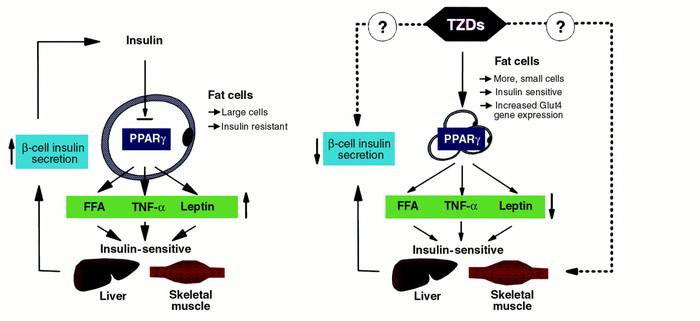
Left panel: Fat cells in the insulin resistance of type 2 diabetes are larger than in the normal subjects, with increased production of FFA, TNF-α, and leptin. This leads to insulin resistance in the liver and skeletal muscle, resulting in a need for increased peripheral insulin, which is generated by the β cells in the pancreas. Right panel: TZDs stimulate adipocyte differentiation, preferentially generating more numerous, smaller adipocytes. These small adipocytes are more insulin-sensitive, producing less FFA, TNF-α, and leptin. Therefore, insulin is more effective and there is less need for the β cells to increase their secretion of insulin.


Copyright © 2024 American Society for Clinical Investigation
ISSN: 0021-9738 (print), 1558-8238 (online)